Broadway Gym LTD. 205 Broadway, Tillsonburg, ON N4G 3R2, Canada.
Broadway Gym LTD. 205 Broadway, Tillsonburg, ON N4G 3R2, Canada.
Why do workouts feel harder as you age? Learn how muscle loss, nutrition and recovery affect strength, energy and training.

You haven't necessarily stopped training. Your routine may not have changed much either.
Yet the same workout that once felt manageable now leaves you more fatigued. The weights feel heavier. Recovery takes longer. You may need more time between sets, or you finish a session wondering why it took so much out of you.
Age can play a role, but that's only part of the explanation.
Muscle mass and strength gradually change throughout adulthood. So do the way your muscles respond to exercise, how well you recover and, for some people, how efficiently certain nutrients are absorbed. Training still matters enormously, but what happens outside the gym matters too.
Here's what is happening, and what you can actually do about it.
Sarcopenia is the gradual loss of muscle mass, strength and physical function associated with aging. It doesn't begin on a specific birthday, and it doesn't always show up in the mirror. You can maintain a similar body weight while gradually losing muscle and gaining fat, while everyday tasks such as carrying groceries, climbing stairs or lifting a familiar weight become more difficult.
Part of the reason is anabolic resistance, a term researchers use to describe the reduced response of aging muscle to some of the signals that normally stimulate muscle protein synthesis. As exercise physiologist Dr. Nicholas Burd has explained, aging is associated with “a reduced muscle protein synthetic response to protein intake.” That doesn't mean older muscle stops responding. Resistance exercise remains a powerful stimulus for maintaining and building muscle, which is why consistent strength training becomes increasingly important over time.
The rate of muscle loss varies widely. Physical activity, nutrition, illness, injury and periods of inactivity can all influence how quickly strength and muscle function change. The practical question isn't whether you've reached the age when muscle loss begins. It's whether you're continuing to give your body a reason to keep the strength you have.
Training gives your muscles a reason to stay strong. Nutrition gives your body the raw materials to support that work, and both become increasingly important as you get older.
Protein is an obvious piece of the puzzle, but eating more is not necessarily the answer. Your overall calorie intake, protein, carbohydrates, hydration and recovery all influence how well you handle training and recover afterward.
Nutrition can also become more complicated with age. Eating well does not guarantee that every nutrient is being absorbed normally. Vitamin B12 is one example. A 2021 study of 3,299 adults aged 60 and older found that atrophic gastritis was associated with lower B12 levels and a higher prevalence of deficiency. The researchers noted that “absorption of protein-bound vitamin B-12 is impaired” when stomach acid is reduced.
That does not mean every bout of fatigue is a vitamin deficiency, or that everyone over 40 needs supplements. You may simply be under-eating, sleeping poorly, training harder than you can recover from, or missing other basics. Persistent or unexplained fatigue is worth discussing with a healthcare professional rather than trying to solve it with another supplement.
The bigger lesson is simple: your muscles still respond to training, but the inputs around the workout matter. Give your body a reason to get stronger, eat enough to support the work, and give recovery the same attention you give the workout itself.
CHECK OUR SERVICESYes.
Muscle loss comes with age, but you don't have to just sit back and let it happen. You also don't need to train like a powerlifter to fix it.
Starting around age 30, adults naturally lose about 3% to 8% of their muscle mass every decade, and that rate speeds up after 60.
The good news is that you can actively turn that around. Research from the European Working Group on Sarcopenia in Older People and classic studies in the Journal of the American Medical Association show that basic resistance training directly counters this decline. In fact, clinical trials proved that people in their 70s, 80s, and even 90s built brand-new muscle and boosted their strength anywhere from 30% to over 100% in just a few months.
This isn't about chasing heavy gym records. It's about protecting your day-to-day life:
Your body might not react quite as fast as it did in your 20s, but your muscles never lose the ability to adapt, recover, and grow strong.
Canadian movement guidelines recommend at least 150 minutes of moderate-to-vigorous physical activity per week, along with muscle-strengthening activities involving the major muscle groups at least twice per week.
That doesn't mean you need to spend hours lifting weights every day.
A sustainable strength routine can include movements that train the major muscle groups and gradually become more challenging as your capacity improves.
Focus on consistency and progression over quick fixes.
Progress is relative, and doesn't always mean adding more weight. You can also increase repetitions, improve technique, change the exercise difficulty or gradually increase training volume.
One of the simplest ways to stay consistent is surrounding yourself with the right people. Explore our clubs and find a community that keeps you motivated to show up every session.
DISCOVER ALL OUR CLUBSMoving through minor injuries has its place, but knowing when to pull back is how you stay consistent for the long term.
Occasional fatigue after a hard workout is normal. Persistent or unexplained fatigue is different.
If your exercise tolerance has changed significantly, you're experiencing unusual weakness, dizziness, shortness of breath, unexplained weight changes or other persistent symptoms, don't assume you simply need a better workout plan.
Fatigue can have many causes, including
A healthcare professional can help determine whether testing or further evaluation is appropriate.
There isn't one exercise, food or supplement that prevents muscle loss. The more useful approach is remarkably straightforward:
Muscle loss happens gradually. So does maintaining it.
The habits you build now can influence what your body is capable of doing years from now.
Strength training works best when you can actually make it part of your life.
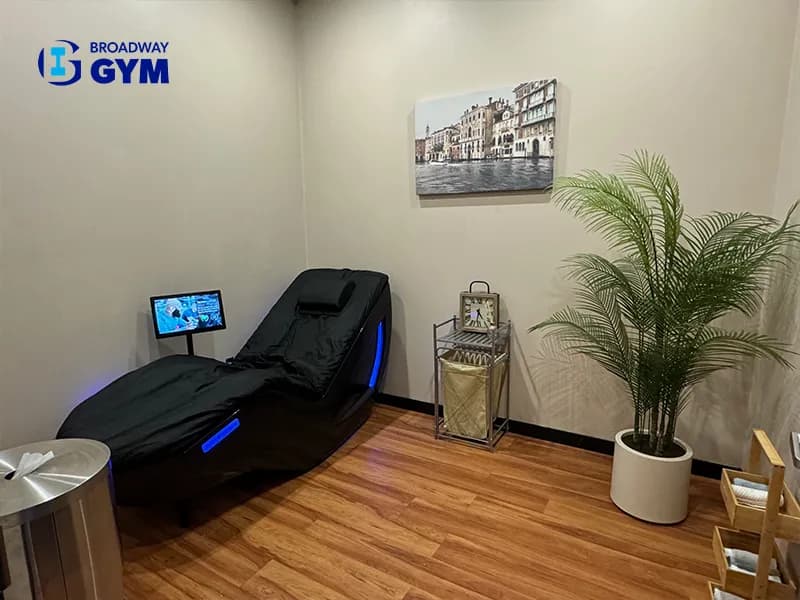
At Broadway Gym in Tillsonburg, members have 24/7 access to strength and cardio equipment, personal training, equipment orientation and recovery amenities including HydroMassage and an indoor sauna.
Whether you're returning to training, building strength for the first time or looking for a more consistent routine, the goal is the same: give your body a reason to stay capable.
Sarcopenia is the progressive loss of skeletal muscle mass and muscle function associated with aging. It can affect strength and physical performance as well as muscle size.
Yes. Muscle remains responsive to resistance training throughout adulthood. The rate and magnitude of adaptation can change with age, but adults can still improve muscle strength and size through appropriate training.
Canadian movement guidelines recommend muscle-strengthening activities involving the major muscle groups at least twice per week. Your ideal frequency depends on your training experience, goals, recovery and health.
Yes. Certain nutrient deficiencies can contribute to fatigue, but fatigue has many possible causes. It is better to investigate persistent symptoms with a healthcare professional than assume a specific deficiency is responsible.
Not necessarily. A nutritious diet and resistance training form the foundation. Supplements may be useful in specific circumstances, but whether one is appropriate depends on individual needs and health factors.
At Broadway Gym, you get a private 24/7 space equipped for real strength training and real recovery, including HydroMassage and an indoor sauna. We built this facility so you can train on your own terms, at your own speed, whenever it actually fits into your day.
✅ Round-the-clock 24/7 access
✅ HydroMassage and massage chairs
✅ Indoor sauna and clean shower facilities
✅ One-on-one personal training
You bring the effort, and we provide the access, the gear, and the recovery tools to make it the best gym experience in Tillsonburg.
CLAIM YOUR FREE MONTHYour fitness can tell you more than a number on a scale ever will. Here's how to start measuring what your body can actually do.
Read articleNo time to work out? This 30-minute gym plan in Tillsonburg helps busy people build real results. Try it free at Broadway Gym.
Read articleBurned out and running on empty? Discover five science-backed ways to relieve stress in Tillsonburg,
Read article