Broadway Gym LTD. 205 Broadway, Tillsonburg, ON N4G 3R2, Canada.
Broadway Gym LTD. 205 Broadway, Tillsonburg, ON N4G 3R2, Canada.
Your fitness can tell you more than a number on a scale ever will. Here's how to start measuring what your body can actually do.

How easily can you climb a flight of stairs? Carry groceries? Get through a long day without feeling completely drained? These everyday tasks can tell you a lot about your fitness because they show how well your body handles the demands of real life.
That matters because a large share of Canadian adults are still falling short of recommended activity levels. Only 46.2% of Canadian adults met the recommended level of physical activity in 2022–2024, according to Statistics Canada.
So before worrying about how you look, it is worth asking a different question: What can your body actually do right now?
Before you read on, see where you stand:
Step onto a scale and you get one number; look in the mirror and you get an opinion. Neither tells you how easily you can carry groceries, climb stairs, get up from the floor, move furniture, walk for an hour, or keep up with the people you care about.
That is why capability is a useful way to think about fitness. Your body has several jobs to do, and training should help you handle those jobs better.
Statistics Canada found that 46.2% of Canadian adults met the recommended level of physical activity in 2022–2024, based on directly measured data.
Canada's 24-Hour Movement Guidelines recommend that adults should get at least 150 minutes of moderate-to-vigorous aerobic activity per week, plus muscle- and bone-strengthening activities at least two days a week.
You do not need to become an elite athlete to benefit. You need to give your body regular reasons to stay capable.
Think about four areas: strength, cardiovascular fitness, mobility, and balance.
Strength helps you produce force. That can mean lifting a dumbbell, carrying a heavy bag, or getting up from a chair without using your hands.
Cardiovascular fitness helps you sustain activity. It shows up when you walk uphill, climb several flights of stairs, or spend an afternoon on your feet without feeling completely drained.
Mobility affects how well your joints move. Balance helps you control your body when your position changes or the surface beneath you is less stable.
These abilities overlap. A squat, for example, can involve leg strength, hip and ankle mobility, balance, and coordination. A farmer's carry challenges your grip, core, and ability to maintain posture while moving.
That is useful training because it resembles real movement.
The number can sound large until you break it down.
One hundred and fifty minutes is 2.5 hours per week. Spread across five days, that is about 30 minutes a day.
Canada's physical activity guidance recommends at least 150 minutes of moderate-to-vigorous activity each week for adults. The World Health Organization gives a similar range, recommending 150–300 minutes of moderate activity per week, or 75–150 minutes of vigorous activity, plus muscle-strengthening work on at least two days.
That doesn't mean every workout needs to be an all-out effort. You can accumulate those minutes through different activities, depending on your fitness level and preferences:
An accessible, low-impact option. Taking a brisk loop around Lake Lisgar or down the Carroll Trail is a great way to build daily consistency.
Excellent for building lower-body endurance while taking pressure off your joints.
Provides a smooth, full-body cardiovascular workout that engages both your upper and lower body.
Great non-weight-bearing alternatives to keep your heart rate elevated while minimizing impact.
For someone who currently does very little, starting with shorter sessions can make more sense than trying to transform their routine overnight. The Canadian Society for Exercise Physiology specifically encourages realistic goals and notes that moving toward the guideline targets can provide health benefits.
The goal is to build something you can repeat.
Strength training is often reduced to muscle size. The more useful question is: What does being stronger actually let you do?
It can make everyday movements feel more manageable. Stronger legs can help you climb stairs, walk up hills, and get out of a chair. Stronger back and shoulder muscles can help with lifting, pulling, and carrying. Better grip strength can make groceries, luggage, and other everyday loads easier to handle.
This matters at every age. In a Public Health Agency of Canada analysis, 54.9% of Canadian adults aged 18 to 64 met the recommended amount of muscle- and bone-strengthening activity in 2020. Among adults 65 and older, that figure fell to 41.7%. The researchers also found that meeting the recommended level of strength activity was associated with better physical and mental health.
Canada's 24-Hour Movement Guidelines recommend muscle- and bone-strengthening activities at least twice a week. But strength does not have to mean complicated workouts or lifting extremely heavy weights.
Different types of strength support different movements:
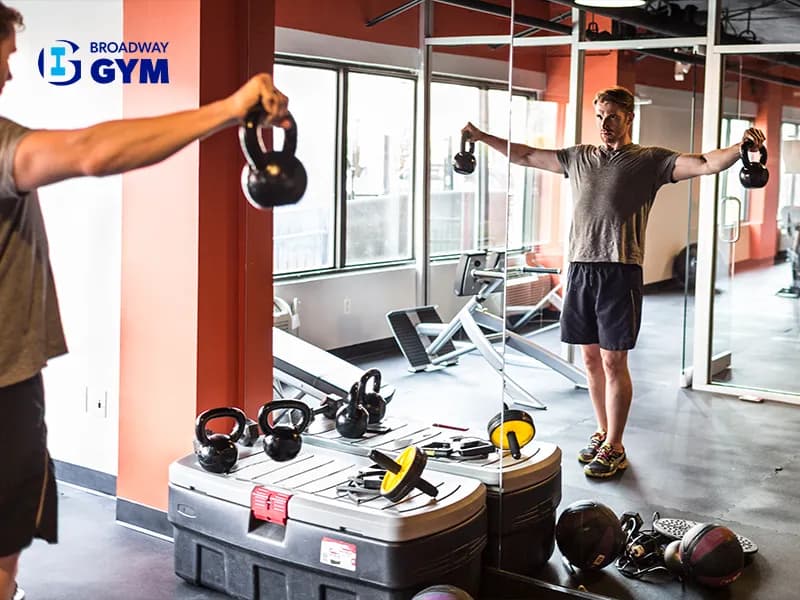
A basic strength session can train several of these areas without requiring a complicated routine. You might include a squat or leg press, a pulling movement such as a row, a pushing exercise, a hip-hinge movement, and a loaded carry.
The exercises can stay familiar while the challenge gradually increases.
When an exercise becomes easier to perform with good control, you can make it more challenging. Add some weight. Perform another repetition. Increase your range of motion. Slow down the movement. Improve your technique.
A gym can make that progression easier because you have access to different machines, free weights, and resistance exercises. As your ability develops, you can adjust the challenge without having to completely change your routine.
The goal is not simply to lift more. It is to make your body capable of doing more.
Cardio should help you handle activity for longer without feeling completely drained.
Walking, cycling, using a treadmill, rowing, or doing a circuit can all challenge your cardiovascular system. You do not need to train for a race to benefit. The goal is to gradually improve your ability to sustain movement.
The World Health Organization recommends 150 to 300 minutes of moderate aerobic activity per week for substantial health benefits. It also emphasizes that some physical activity is better than none.
If you are currently inactive, begin with an amount you can realistically maintain. As your fitness improves, you can gradually increase the duration or intensity.
Better cardio is not about making every workout harder. It is about making sustained activity easier.
Strength is only useful if you can use it through the movements your body needs every day.
Think about reaching overhead, bending down, getting up from the floor, or turning to look behind you. These movements depend partly on how freely your joints can move and how well you can control that movement.
Mobility is another practical measure of fitness. If you can squat, reach overhead, rotate, bend, and step comfortably, you have more freedom in how you move through daily life and your workouts.
That gives mobility a practical purpose.
It is not about becoming exceptionally flexible or spending an hour stretching. It is about maintaining the movement you need to train, work, and handle everyday activities comfortably.
Mobility can also be incorporated into a normal workout. Controlled movements through a comfortable range of motion can help you work on mobility while you build strength and coordination.
The goal is simple: keep the movements you rely on available to you.
You do not need to obsess over every measurement.
Instead, choose a few things that tell you whether you are becoming more capable.
Try tracking:
You can also track simple performance markers such as repetitions, resistance, walking time, or distance.
These numbers have a useful purpose. They show progress even when the mirror does not.
And progress is not always dramatic. Adding five pounds to an exercise, walking another ten minutes, or completing a workout you used to skip still represents a change in what your body can handle.
The next time you walk into the gym, do not just ask yourself how hard you want to train.
Ask yourself what you want to be better at when you leave.
Choose one ability to work on.
Maybe you want to carry heavier groceries without struggling. Climb a flight of stairs without losing your breath. Feel stronger when you lift something off the floor. Move with less stiffness. Or simply become more consistent with your workouts.
Build your session around that goal.
If strength is the priority, give your resistance training the attention it deserves. If cardiovascular fitness is the focus, spend more time working your heart and lungs. If movement is the issue, include exercises that challenge your mobility and control.
Give yourself something to improve next time.
That could mean one more repetition, a little more weight, a longer walk, or better control during an exercise. Progress does not always have to be dramatic.
A good workout is not just one that leaves you tired. It is one that helps you do something a little better than you could before.
CHECK OUR SERVICESA better measure of fitness is often visible in the things you stop thinking about.
The stairs feel easier.
The heavy box does not feel quite so heavy.
You can walk farther.
You recover faster.
You feel more confident using equipment.
You can do more than you could a few months ago.
Those changes are worth tracking because they describe something a scale cannot: your physical capacity.
Canada's guidelines give adults a clear starting point: work toward at least 150 minutes of moderate-to-vigorous activity each week and include regular muscle-strengthening activity.
From there, the goal is progression.
Train consistently. Learn the movements. Increase the challenge when you are ready. Give your body enough recovery to adapt.
Then measure your fitness by what you can do.
DISCOVER ALL OUR CLUBSCanadian guidance recommends at least 150 minutes of moderate-to-vigorous physical activity per week for adults. Canada's 24-Hour Movement Guidelines also recommend muscle- and bone-strengthening activities at least twice a week.
No. Resistance training can begin with bodyweight exercises, machines, bands, dumbbells, or other forms of resistance. The appropriate challenge depends on your current ability and goals.
They serve different purposes. Cardiovascular training helps develop endurance, while resistance training helps improve muscular strength and function. A balanced routine can include both.
Canadian guidelines focus on weekly activity targets rather than prescribing a specific number of gym visits. How often you train can depend on your goals, workout intensity, experience, and recovery.
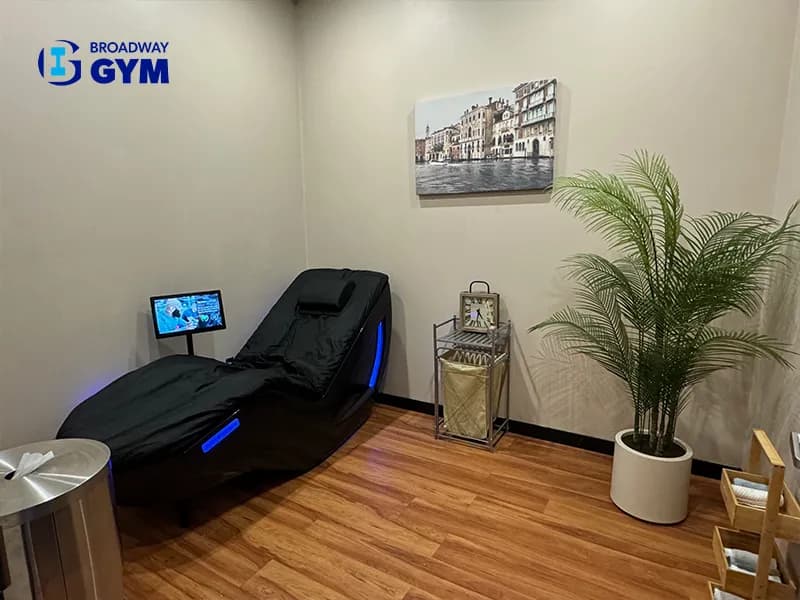
At Broadway Gym, members have access to a private, 24/7 training environment with strength and cardio equipment, plus recovery amenities including HydroMassage and sauna. The goal is to give you a place where training can fit around your schedule and progress can happen at your own pace.
At Broadway Gym, you get the equipment, access, and recovery amenities to make your workouts fit your life.
CLAIM YOUR FREE MONTHNo time to work out? This 30-minute gym plan in Tillsonburg helps busy people build real results. Try it free at Broadway Gym.
Read articleBurned out and running on empty? Discover five science-backed ways to relieve stress in Tillsonburg,
Read articleBulk smart this Christmas! Learn how to clean bulk for lean muscle gains — not belly fat. Broadway Gym shows you how to eat, lift, and recover like an athlete.
Read article